
VA30 Art History Project
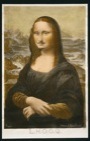
Summaries of Twenty - Five Art History Movements Powerpoint or Book
There are hundreds of Movements in the history of civilization. The art created during each period in history reflects the culture of the time and the country in which the art evolves. Studying art history is a way of studying cultural history while understanding a wide variety of art. These summaries are to be organized in chronological order. Each summary is to have the title of the movement. Five of the summaries must be Canadian, therefore you must include 5 Canadian art movements in the chronological order.
In the powerpoint presentation create one slide for each movement. Each slide should include 5 images and one point of each of the following information:
Title of art movement - /5
Summary of art movement including dates of time period and country(countries) of art movement - /5
Summary of art work completed during this movement - /5
Summary of artist’s and their influences - /5
Visual presentation of 5 images - /5
Overall introduction and conclusion of all movements and a summary of why you chose the movements you did and what you have learned - /5
Each slide will be worth 5 marks (25 x 5 =125) and the overall presentation will be worth 75 marks. The entire project is worth 200 marks or 10% of your final grade. Each student will be graded for their individual powerpoint or book presentation, however you can help one another with accumulating information and the editing of material. Two students should not have completely similar images and words. Your own personal point of view and display of material is worth 75 marks.
The following is a list of art movements throughout the history of human civilization.
History of Art Timeline
Dates of Movements, Styles, Schools, Artists in Western Visual Arts 2.5 Million BCE - Present
PREHISTORY
For a chronological list of important dates concerning prehistoric art and culture, from the Lower Paleolithic era of the Pliocene Epoch, plus the Middle and Upper Paleolithic of the Pleistocene Epoch, and the Mesolithic and Neolithic eras of the Holocene, along with the Bronze and Iron Age, see Prehistoric Art Timeline. Includes details of the earliest examples of Stone Age art, such as petroglyphs, cupules, cave painting and famous venus figurines. Also includes dates of ancient art from Egyptian, Minoan and Mycenean civilizations, and charts the rise in religious art.
--------------------------------------------------------------------------
The Period of Classical Antiquity
--------------------------------------------------------------------------
Era of Greek art. (Fresco murals, encaustic panel paintings, sculpture, ceramics flourish)
Greek sculpture (the main surviving artform) is usually divided into these styles: Daedalic (650-600), Archaic (600-500); Early Classical (500-450), High Classical (450-400), Late Classical (400-323) Hellenistic Period (323-27). Also: Archaic Painting, Greek Classical Painting and Hellenistic Painting. For architectural designs, see Greek Architecture.
Foundation of ancient Rome. Etruscan Kings rule.
First use of Greek alphabet.
Famous Romanian wood sculpture: Thinker from Cernavoda.
Ancient Persians conquer Mesopotamia. Build Persepolis.
High point of Greek black-figure style of ceramic pottery. Soon followed by red-figure.
Democracy in Athens. Celtic La Tène art style begins. Roman Republic starts.
Greek sculptor Polykleitos creates Doryphoros statue.
Construction of the Parthenon begins. Finished 432.
Famous Greek bronze sculpture: Discus Thrower (by Myron).
Famous Etruscan works: Capitoline Wolf and Chimera of Arezzo.
Greek sculptor Praxiteles produces Aphrodite of Knidos and Hermes.
Famous Greek sculpture: Boy From Antikythera.
Rise of Alexander the Great (d.323)
Era of Roman art. Heavily influenced by Hellenistic (Greek) painting & sculpture.
Creation of Chinese Terracotta Army Warriors.
Famous Greek sculpture: Dying Gaul.
Start of Chinese Han Dynasty (ends 220 CE) during which the first porcelain was made.
Famous Greek sculpted frieze: Altar of Zeusat Pergamon.
Famous Greek statue: Venus di Milo(by Alexandros of Antioch).
Famous Greek sculpture: Laocoon (by sculptors Hagesandrus, Polydorus, Athenodorus)
Beginning of Roman Empire.
Vesuvius errupts, destroying Pompeii.
Famous Roman relief sculpture monument, Trajan's Column.
Christian mural paintings in catacombs of Rome. Period of Late Roman Art.
Colossal Head of Constantine. Edict of Milan legitimizes Christianity.
St Peter's Basilica in Rome completed. See also Roman Architecture.
Roman Empire officially splits into West (Rome/Ravenna) and East (Byzantium).
Fall of Rome to repeated invasions by Visigoths and Vandals.
--------------------------------------------------------------------------
The Period of the Dark Ages
--------------------------------------------------------------------------
Era of Byzantine art. Panel painting, Orthodox icon painting and mosaic art flourish.
Construction of Hagia Sophia in Byzantium/Constantinople. See Byzantine Architecture.
Era of Irish monastic art. Celtic/Saxon Illuminated Gospel Manuscripts.
Cathach of Colmcille (560 CE), Book of Durrow (670), Book of Kells (c.800).
Oils (walnut, linseed) first used for oil-resin varnishes, and for painting on stone & glass.
Early form of porcelain ceramics appear in China during the Tang Dynasty (c.600-900 CE).
Medieval Christian artworks appear during Pre-Romanesque Era of Carolingian Renaissance under Charlemagne I, Otto I. Byzantine art combines with Western Christian themes to create Illuminated Bible texts.
--------------------------------------------------------------------------
The European Revival
--------------------------------------------------------------------------
Carolingian Art flourishes 750-900. Charlemagne builds famous Palatine Chapel in Aachen.
Ottonian Art flourishes 900-1000.
Height of Romanesque art. Religious murals, stained glass. Cathedrals built at Angoulême, Essen, Mainz, Worms; Pisa (leaning tower) plus Cluny Abbey Church.
Bayeaux Tapestry, most famous piece of tapestry art commissioned by Odo of Bayeaux.
Era of Gothic art and Gothic architecture. Many Gothic cathedrals designed: (eg. St. Denis (1140), Notre Dame (1160), Chartres (1194), Reims (1211), Canterbury (1100), Westminster Abbey (1245), Cologne, w. pointed arches, flying buttresses, huge stained glass windows. New panel paintings (tempera on wood), and illuminated texts (opaque paint on vellum). Oil paints first used for painting on panel.
Era of Proto-Renaissance art/architecture, influenced by International Gothic style.
Giotto paints Scrovegni Chapel frescoes at Padua.
Zen Ink-Painting dominates Japanese art. See also Chinese painters.
Arrival of the Black Death plague. Wipes out one third of European population.
Medici Family Bank founded in Florence.
--------------------------------------------------------------------------
The Renaissance (North of Italy, known as the Northern Renaissance)
--------------------------------------------------------------------------
• Italian Early Renaissance (1400-90);
The three main centres of the Italian Renaissance, were Florence, Rome and Venice.
Famous painting: The Expulsion of Adam and Eve from Paradise by Masaccio.
Dome of Florence cathedral designed by Filippo Brunellesci.
Famous bronze sculpture: David by sculptor Donatello.
Famous mythological painting: The Birth of Venus by Sandro Botticelli.
Famous example of linear perspective: Lamentation Over the Dead Christ by Mantegna.
• Italian High Renaissance (1490-1530)
Famous history painting: The Last Supper by Leonardo Da Vinci.
Michelangelo, greatest sculptor in the history of sculpture, creates David in Florence.
Leonardo paints the Mona Lisa, one of the greatest Renaissance paintings.
Vatican Museums open with a display of the sculpture, Laocoon and His Sons. Work begins on redesign and rebuilding of St. Peter's Basilica, Rome.
Michelangelo paints the Genesis Old Testament Sistine Chapel frescoes.
Raphael works on paintings for the papal apartments. See Raphael Rooms (Vatican).
Differences in climate, religion, geography and culture between Italy and Northern Europe leads to differences in how the Renaissance develops north of Italy.
FLANDERS and HOLLAND (1430-1580)
Technical improvements in oil paints hasten their adoption by Dutch Old Masters. The technique then spreads to Italy, and is taken up by Leonardo Da Vinci and others.
Golden Age of Flemish painting: Jan Van Eyck paints The Ghent Altarpiece.
Jan Van Eyck paints masterpieces: The Arnolfini Wedding; Man in a Red Turban (1433)
Famous painting: Descent from the Cross (The Deposition) by Roger Van der Weyden.
Moralizing fantasy paintings by Hieronymus Bosch. (eg. The Garden of Earthly Delights). See Netherlandish Renaissance Art (1430-1580).
GERMANY (1450-1550)
Invention of the screw printing press by the German Johann Gutenberg, along with an oil-based ink, metal prism matrices, punch-stamped typeface molds and a functional metal alloy to mold the type. Astonishingly, only minor improvements were made to Gutenberg's press design until about 1800.
Tilman Riemenschneider creates greatest religious wood sculpture.
Albrecht Durer, greatest artist & printmaker of Northern Renaissance, flourishes.
Martin Luther starts the Reformation. See German Renaissance Art (1430-1580).
See also: Renaissance Architecture.
--------------------------------------------------------------------------
Era of Mannerism. Links High Renaissance and the Baroque eras.
Michelangelo paints The Last Judgement biblical frescoes in the Sistine Chapel.
Council of Trent: Church in Rome launches Counter-Reformation. Fine arts and architecture used by Catholic religion to promote its authority and public appeal.
The artists Titian and Tintoretto both active in Mannerist Venice Renaissance.
The eminent Renaissance art critic Giorgio Vasari, publishes his Lives of the Artists.
Foundation of the Academy of Art in Florence (Accademia dell'Arte del Disegno) the first official school of drawing in Europe to promote what is now called Academic Art.
Greek mannerist artist El Greco establishes himself in Spain as religious painter.
Foundation of the Academy of Art in Rome (Accademia di San Luca).
Foundation of the Uffizi Gallery in Florence.
Mannerist sculptor Giambologna creates his famous Rape of the Sabines.
Era of Baroque Art and Baroque Architecture, noted for its grandeur. Its bold dramatic and often colourful Baroque Painting (by Caravaggio, Rubens, Velazquez) and portraits (by Van Dyck), as well as sculpture by Bernini, are used by secular rulers to buttress their absolutism, and by the Catholic Church as a form of propaganda. Baroque art in Protestant countries takes a more middle-class down-to-earth style, focusing on highly realistic portable artworks enhancing the status of the owner: such as personal portraits, still life & landscape, of the Dutch Realist School led by Jan Vermeer, and by Rembrandt.
Bernini designs the grand theatrical approaches to St Peter's to overawe visitors.
Rise of French tapestry art with the foundation of Gobelin Factory under Charles Le Brun.
Era of Rococo Art and interior architectural design. Light, whimsical, decorative style reflecting the decadence of the French Kings, and reaction against Baroque gravity. Tiepolo, Watteau, Boucher & Fragonard are the main artists. See Rococo Architecture.
Ceramicist Ehrenfried von Tschirnhaus and alchemist Johann Friedrich Bottger discover a formula (using feldspathic rock) for true porcelain ceramics in Meissen, Germany.
Foundation of Sotheby's art auctioneers by Samuel Baker.
Era of Neoclassicism, a reaction against the frivolity of the French court. Promoted a return to the values and steadfast nobility of Classical Greece and Rome. Neoclassical artists included painters Goya, Ingres and Jacques-Louis David, sculptors Houdon, Canova and Thorvaldsen. Neoclassical architecture (buildings decorated by columns of Greek-style pillars, and topped with classical Renaissance domes) dominate Europe and spread to America (eg. US Capitol building).
Catherine the Great establishes The Hermitage Museum in St Petersburg.
Foundation of Christie's art auctioneers by James Christie the Elder, in London.
Foundation of the Royal Academy of Arts in London.
Beginning of the French Revolution.
Opening of the Louvre Museum, one of the world's greatest art museums.
Napoleon seizes power in France.
Invention of lithography (using a matrix of fine-grained limestone) by the Austrian printer Alois Senefelder.
Mid-point of English Figurative Painting 18th/19th Century, soon to be followed by the influential English School of landscape painting.
Era of Romanticism in art, encouraged by the heroic ideals of the French Revolution. French Romantics led by Eugene Delacroix. Other leading artists included William Blake, Caspar David Friedrich, JMW Turner, Thomas Cole and John Constable.
Invention of machine made paper (made from linen and cotton rags) by the Frenchman Nicholas Louis Robert.
German painters Friedrich Overbeck and Franz Pforr form the Nazarenes movement. Anti-classicism, inspired by Catholicism, they revived the art of fresco painting.
Completion of the Prado Museum in Madrid.
Famous painting: Liberty Leading the People, by Delacroix.
Barbizon 'School': Group of French landscape painters working near Fontainebleau. Led by Theodore Rousseau, the Barbizon School made landscape as important as portraiture and genre painting, paving the way for Impressionism, the supreme plein-air painting movement. Other members included Jean-Baptiste-Camille Corot and Honoré Daumier. Other landscape plein-air painting schools emerge in Pont-Aven & Concarneau.
Opening of the Alte Pinakothek museum in Munich.
Invention of the revolving perfecting press by American Richard March Hoe, (followed in 1846 by the first rotary press) and the manufacture of paper from wood pulp.
Collapsible tin paint tube invented by painter John Rand. Boosts plein air painting.
Romantic Pre-Raphaelite art movement founded by Dante Gabriel Rossetti, London.
High point of Orientalism, a painting school celebrating the exotic Near and Middle East. Members included: Jean-Auguste Ingres, Sir David Wilkie, Eugene Fromentin.
The emergence of Realism, the progressive movement in art and literature. Spurning the ideal, Realists, such as Jean-Francois Millet and Gustave Courbet, sought to depict the truth: in particular, the everyday social truths of the new industrial age. Realism continues to spawn new approaches to the depiction of reality in the 20th century.
Gustave Courbet paints The Painter's Studio for display at his own exhibition: Le Réalisme.
Invention of photo-lithography by the French lithographer, Firmin Gillot, followed in 1872 by his son's invention of zincography, combining photography with etching.
--------------------------------------------------------------------------
The Age of Modern Art
--------------------------------------------------------------------------
Lesser known modern art movements of the mid-late 19th century included: Macchiaioli a Florentine style of anti-academy Impressionism (1860-90); Japonism, popular in UK and France (1875-1900); French Naturalism (Bande Noire, Brittany) inspired by Emil Zola (1880s-90s); Naive Art, exemplified by Henri Rousseau (1895-1940); Symbolism, an intellectual form of expressionist painting (1886-1900); Les Nabis, a mystical religious school of decorative art which spanned painting, tapestry, mosaics, fans, ceramics, and book illustration (1890s); Verismo, an Italian school of raw realism, led by Telemaco Signorini. (1890-1900); Intimisme, a style of intimate genre-painting exemplified by Edouard Vuillard (1890s-1900s).
Edouard Manet paints Déjeuner Sur L'Herbe then Olympia, in the style of Goya (The Nude Maja 1800), causing a scandal in the French Salon.
Era of French Impressionism, the name given by French critic Louis Leroy in 1874 to the works of Claude Monet, Pierre-Auguste Renoir, Alfred Sisley, Camille Pissarro and others, after seeing Monet's painting Impression: Sunrise at the first Impressionist show. Impressionists focused on the depiction of outdoor light, although within a decade most of them (including Degas) had turned to painting indoors or in studios.
France's greatest modern sculptor Auguste Rodin shows The Age of Bronze at the Salon. Later Rodin masterpieces include: The Gates of Hell (1880-1917), The Burghers of Calais (1884-86) and The Kiss (1888).
The Pointillist neo-Impressionist artist Georges Seurat creates Sunday Afternoon on the Island of La Grande Jatte, employing the optical colour-theory of Divisionism.
The prolific period of the Dutch Expressionist Vincent Van Gogh, which includes his masterpieces: Vase With Twelve Sunflowers (1888), Wheatfield with Crows (1890), Portrait of Dr. Gachet I and II (1890), Starry Night (1889) and others.
Era of Post-Impressionism, led by Paul Cezanne, Paul Gauguin, Georges Seurat, Henri de Toulouse-Lautrec and Vincent Van Gogh. Highpoint of Arts and Crafts Movement.
Emergence of Secession and Art Nouveau, two general art movements which sought to break away from the traditions of the official academies. They also sought to unite the fine arts of painting and sculpture and architecture with the applied arts of design and decoration (see Poster Art; and History of Poster Art 1860-1980). Their avant-garde exhibitions caused great controversy. In Vienna, where it was known as Jugenstil or Sezessionstil, the breakaway was led by Gustav Klimt. A later member was Egon Schiele, known for his disturbing portraits and Art Nouveau cityscapes.
National Gallery of British Art founded in London, popularly known as the Tate Gallery.
Death of Aubrey Beardsley, the brilliant 25-year old Art Nouveau illustrator.
The emergence of Expressionism. The expressionist art school/style begins with Van Gogh (d.1890), includes Edvard Munch (eg. The Scream, 1893), and the French Fauvism movement (1898-1908) led by Henri Matisse; also the Parisian/Italian painter Amedeo Modigliani. German Expressionism, a major offshoot, included: The Bridge (Die Brucke) (1905-13) founded by Karl Schmidt-Rottluff and Ernst Ludwig Kirchner, was an influential expressionist group based in Dresden. The Blue Rider (Der Blaue Reiter) (1909-14) expressionist group was formed in Munich, the home of the avant-garde Neue Kunstler Vereiningung (New Artist Association) by the Russian born Wassily Kandinsky. New Objectivity (Die Neue Sachlichkeit), was a 1920s German Expressionist group led by painters Otto Dix and Max Beckmann. Primitivism/Primitive art emerges in the West.
Pablo Picasso. Early career: characterized by his Blue Period (c.1901-4), Rose Period (c.1905-7), African Period (c. 1907). During the latter, he created Les Demoiselles d'Avignon, a landmark painting in the development of modern art which signalled a radical departure from the artistic ideas of the preceding ages and heralded the coming of a new artistic movement (Cubism) as well as the birth of modern abstract art.
The Ashcan School founded. It comprised a small number of painters who chronicled everyday life in New York City during the pre-war period, producing realistic and unvarnished pictures and etchings of urban streetscapes and genre scenes.
Armory Show, NY, the most important exhibition of modern art ever held in America.
Picasso combines with Georges Braque to invent the revolutionary art movement called Cubism, (overturning conventional ideas of perspective and form) which emerges in 3 stages: Prototype Cubism (c.1908-9), Analytical Cubism (c.1909-12), Synthetic Cubism (c.1912-19). Other leading Cubist painters include Juan Gris and Fernand Leger.
The chaos of World War I and the Russian Revolution (1917) shatter many conventional ideas in the world of painting and sculpture, leading to numerous avant-garde movements. These include: Futurism (1909-15), which promoted a worship of machinery and modernity; Orphism (Orphic Cubism or Simultanism) (1910-13), founded by French artist Robert Delaunay, which explored the colour phenomena seen in nature; Rayonism (1912-13), Russian style of painting dominated by pictorialized 'rays of light', invented by Mikhail Larionov, Vorticism (1913-15) the first UK style to embrace Cubist ideas; Dada (1916-24) which used banal imagery to shock; Suprematism (1913-20s) a Russian abstract art movement led by Natalie Goncharova and Kasimir Malevich; Constructivism (1917-21) a Russian avant-garde architectural art style; the Bauhaus Design School (1919-33) founded by Walter Gropius; De Stijl (1917-31), the highly influential Dutch 'school' of geometric abstract art and design led by Theo Van Doesburg and Piet Mondrian, also known as Neo-Plasticism. All these styles were labelled 'degenerate art' (entartete kunst) by the Nazis.
In America, the era of New Realism, as personnified by Edward Hopper (1882-1967). In addition, another style known as Social Realism portrays the everyday hardships of the Depression era. Best known Social Realists include Ben Shahn, Jack Levine and Jacob Lawrence: all strongly influenced by the earlier Ashcan School of New York City.
In Europe, the era of Surrealism: a movement emerging out of Cubism, Dada, Freud and Communist philosophy, which aimed to fuse the conscious with the unconscious to create a 'super-reality'. Led by Andre Breton, Rene Magritte and Salvador Dali. A parallel art movement to Surrealism was Magic Realism, whose paintings are anchored in everyday reality, but with overtones of fantasy. The name was coined by the German art historian and critic Franz Roh in 1925, in a book entitled Nach Expressionismus: Magischer Realismus.
High point of Art Deco, a style of design for furniture, jewellery, textiles and interior decor. The term was coined from the title of the seminal design exhibition in Paris, Exposition Internationale des Arts Decoratifs et Industriels Modernes.
The period of Socialist Realism: a form of public propaganda art instituted by Joseph Stalin during the era of forced industrialization in Soviet Russia.
Chaos and war undermines the primacy of Paris as the world centre of art, a title which soon devolves upon New York. In London (1938), a left-wing modern realist group of artists establish The Euston Road School, advocating the portrayal of traditional subjects in a realist manner, to make art more understandable and socially relevant.
Pablo Picasso paints his monumental monochrome masterpiece Guernica.
New York supercedes Paris as the centre of innovation in art, Abstract Expressionism emerges as the dominant new style. Leading lights include the so-called action painters led by Jackson Pollock, his wife Lee Krasner and Willem De Kooning, and Colour-Field painters, such as Mark Rothko, Barnett Newman and Clyfford Still. In Europe, this type of Neo-Expressionism focused on the isolation of man (figurative style) as in the works of Alberto Giacometti and Francis Bacon, although hyper-modern movements like Spatialism (Italy) also appeared, prefacing later Performance and environmental/land artworks.
The era of Pop-Art, championed by Andy Warhol, Roy Lichtenstein, Jasper Johns and Robert Rauschenburg. Pop-Artists employ contemporary iconic images in an anti-art approach, giving commonplace articles artistic status. Meanwhile, Op-Art becomes the avant-garde form of abstract art. Arte Povera blossoms in Italy 1967-71.
The advent of Photorealism (sometimes referred to as superrealism), a form of meticulous photo-like realism, championed by Richard Estes (street scenes with elaborate window reflections) and Chuck Close (b.1940) who specializes in huge, neck-up portraiture. John Doherty is Ireland's best known photorealist artist.
--------------------------------------------------------------------------
The Age of Postmodernist Art
--------------------------------------------------------------------------
From roughly this point onwards, Modern Art (c.1860-1979) or 'Modernism' becomes superceded by what art-historians like to call 'Post-Modernism'. In a nutshell, Modernism (ie. the main movements which emerged during the period 1860-mid 1960s) asserted the supremacy of a particular style or interpretation of reality, normally considerably at odds with the prevailing academic tradition. In contrast, contemporary art movements take the view that the 'substance' of Modernism has performed no better, and must be dumped in favour of greater style. Post-modernism thus represents the triumph of style over substance. Post-modernist art typically employs new media and materials, stresses the importance of 'communication' from artist to audience and seeks to renew the big question: 'what is art?' Much of this is reflected in contemporary art forms such as Conceptual Art, Installation, Video art, Performance, and Happenings, as well as the works of such showmen as Damien Hirst (see Young British Artists), Gilbert and George, the environmental 'artists' Christo and Joanne-Claude, and the nude installationist Spencer Tunick. While the ephemeral nature of this contemporary art is fully consistent with global trends of instant gratification, one wonders whether today's artists will be remembered 50, 100 or 500 years from now, and if not, whether this reflects adversely on the theory and practice of art in the 21st century. One major collector who believes strongly in postmodernist art is Charles Saatchi.
Growth of digital art, such as Giclee Prints.
Garçon à la Pipe (1905) by Pablo Picasso sells at Sotheby's New York for $104.2 million, making it the highest priced painting ever sold at auction.
No 5 (1948) by Jackson Pollock, sells privately for $140 million, making it the most expensive painting ever sold. For more, see: Top 10 Most Expensive Paintings.
Triptych (1976) by Francis Bacon sells at Sotheby's New York for $86.3 million, becoming the most expensive post-war work of art sold at auction, and the highest priced work by an Irish artist. In the same year Damien Hirst sells works worth £111 million at Sotheby's in London, while the list of top 20 contemporary artists is dominated by the Chinese.
While prices for contemporary art plummet, Warhol's 1963 silkscreen print Eight Elvises, reportedly sells for $100 million to anonymous buyer.
New world records for painting and sculpture are set at auction at Christie's and Sothebys. Picasso's Nude, Green Leaves and Bust (1932) goes for $106.5 million, while the sculpture Walking Man I by Alberto Giacometti, sells for $104.5 million. Picasso is now firmly established as the most valuable of all 20th century painters.
Art periods
From Wikipedia, the free encyclopedia
Jump to: navigation, search
Art period n. A phase in the development of the work of an artist, groups of artists or art movement.
This article outlines phases of art in the Western world.
Contents
[hide]
•3 Renaissance to Neoclassicism
[edit] Medieval art
c. 200 - c. 1430 Medieval art
[edit] Renaissance
Renaissance c. 1300 - c. 1602
Italian Renaissance - late 14th century - c. 1600 - late 15th century - late 16th century
Early Netherlandish painting - 1400 - 1500
[edit] Renaissance to Neoclassicism
Mannerism and Late Renaissance - 1520 - 1600
Baroque - 1600 - 1730
Dutch Golden Age painting - 1585 – 1702
Flemish Baroque painting - 1585 – 1700
Rococo - 1720 - 1780
Neoclassicism - 1750 - 1830
[edit] Romanticism
Romanticism -1790 - 1880
Nazarene movement - c. 1820 - late 1840s
The Ancients - 1820s - 1830s
Purismo - c. 1820 - 1860s
Düsseldorf school - mid-1820s - 1860s
Hudson River school - 1850s - c. 1880
Luminism (American art style) - 1850s – 1870s
[edit] Romanticism to Modern Art
Norwich school - 1803 - 1833, England
Biedermeier - 1815 - 1848, Germany
Photography - Since 1825
Realism - 1830 - 1870, began in France
Barbizon school - c. 1830 - 1870, France
Peredvizhniki - 1870, Russia
Hague School - 1870 - 1900, Netherlands
American Barbizon school - United States
Spanish Eclecticism - 1845 - 1890, Spain
Macchiaioli - 1850s, Tuscany, Italy
Pre-Raphaelite Brotherhood - 1848 - 1854, England
[edit] Modern art
Modern art - late 19th century - c. 1970
Note: The countries listed are the country in which the movement or group started. Most modern art movements were international in scope.
Impressionism - 1863 - 1890, France
American Impressionism 1880, United States
Cos Cob Art Colony 1890s, United States
Heidelberg School late 1880s, Australia
Arts and Crafts movement - 1880 - 1910, United Kingdom
Tonalism - 1880 - 1920, United States
Symbolism (arts) - 1880 - 1910, France/Belgium
Russian Symbolism 1884 - c. 1910, Russia
Aesthetic movement 1868 - 1901, United Kingdom
Post-impressionism - 1886 - 1905, France
Pointillism 1880s, France
Les Nabis 1888 - 1900, France
Fauvism - 1904 - 1909, France
Cloisonnism c. 1885, France
Synthetism late 1880s - early 1890s, France
School of Paris early 20th century, France
Neo-impressionism 1886 - 1906, France
Art Nouveau - 1890 - 1914, France
Vienna Secession (or Secessionstil) 1897, Austria
Jugendstil Germany, Scandinavia
Modernisme - 1890 to 1910, Catalan
Russian avant-garde - 1890 - 1930, Russia/Ukraine/Soviet Union
Art à la Rue 1890s - 1905, Belgium/France
Young Poland 1890 - 1918, Poland
Mir iskusstva 1899, Russia
Hagenbund 1900 - 1930, Austria
Expressionism - 1905 - 1930, Germany
Die Brücke 1905 - 1913, Germany
Der Blaue Reiter 1911, Germany
Bloomsbury Group - 1905 - c. 1945, England
Cubism - 1907 - 1914, France
Analytic Cubism 1909, France
Orphism - 1912, France
Purism - 1918 - 1926
Cubo-Expressionism 1909 - 1921
Ashcan School 1907, United States
Jack of Diamonds (artists) 1909, Russia
Futurism (art) - 1910 - 1930, Italy
Cubo-Futurism 1912 - 1915, Russia
Rayonism 1911, Russia
Synchromism 1912, United States
Universal Flowering 1913, Russia
Vorticism 1914 - 1920, United Kingdom
Biomorphism 1915 - 1940s
Suprematism 1915 - 1925, Russia/Ukraine/Soviet Union
Dada - 1916 - 1930, Switzerland
Proletkult 1917 - 1925, Soviet Union
Productivism after 1917, Russia
De Stijl (Neoplasticism) 1917 - 1931, Holland
Pittura Metafisica 1917, Italy
Arbeitsrat für Kunst 1918 - 1921
Bauhaus - 1919 - 1933, Germany
UNOVIS 1919 - 1922, Russia
Others group of artists 1919, United States
American Expressionism c. 1920 -
Precisionism c. 1920, United States
Surrealism Since 1920s, France
Acéphale France
Lettrism 1942 -
Les Automatistes 1946 - 1951, Canada
Devetsil 1920 - 1931
Group of Seven 1920 - 1933, Canada
Harlem renaissance 1920 - 1930s, United States
American scene painting c. 1920 - 1945, United States
New Objectivity (Neue Sachlichkeit) 1920s, Germany
Constructivism (art) 1920s, Russia/Ukraine/Soviet Union
Art Deco - 1920s - 1930s, France
Grupo Montparnasse 1922, France
Soviet art 1922 - 1986, Soviet Union
a. r. group 1929 - 1936
Northwest School (art) 1930s - 1940s, United States
Social realism, 1929, international
Socialist realism - c. 1930 - 1950, Soviet Union/Germany
Abstraction-Création 1931 - 1936, France
Allianz (arts) 1937 - 1950s, Switzerland
Art and Freedom 1939 - mid-1940s
Abstract Expressionism - 1940s, Post WWII, United States
Action painting United States
COBRA (avant-garde movement) 1946 - 1952, Denmark/Belgium/Holland
Tachisme late-1940s - mid-1950s, France
Abstract Imagists United States
Arte Madí 1940s
Art informel mid-1940s - 1950s
Outsider art (Art brut) mid-1940s, United Kingdom/United States
Vienna School of Fantastic Realism - 1946, Austria
The Concretists early 1950s -
Neo-Dada 1950s, international
International Typographic Style 1950s, Switzerland
Soviet Nonconformist Art 1953 - 1986, Soviet Union
Woodlands School 1958-1962, Canada
Russian Non-Conformist Russia/Ukraine
Pop Art mid-1950s, United Kingdom/United States
Situationism 1957 - early 1970s, Italy
Magic realism 1960s, Germany
Minimalism - 1960 -
Art and Language 1968, United Kingdom
Op Art 1964 -
Post-painterly abstraction 1964 -
Hard-edge painting 1960s, United States
[edit] Contemporary art
(Note: there is overlap with what is considered "contemporary," "postmodern," and "modern art.")
Contemporary art - present
Toyism 1992 - present
Digital art 1990 - present
Postmodern art - present
Modernism - present
New realism 1960 -
Performance art - 1960s -
Fluxus - early 1960s - late-1970s
Conceptual art - 1960s -
Graffiti 1960s-
Junk art 1960s -
Psychedelic art early 1960s -
Lyrical Abstraction mid-1960s -
Process art mid-1960s - 1970s
Arte Povera 1967 -
Photorealism - Late 1960s - early 1970s
Land art - late-1960s - early 1970s
Post-minimalism late-1960s - 1970s
Installation art - 1970s -
Mail art - 1970s -
Neo-expressionism late 1970s -
Metarealism - 1970 -1980, Russia
Figuration Libre early 1980s
Young British Artists 1988 -
Rectoversion 1991 -
Neoism 1979
Battle Elephants 1984
Massurrealism 1992 -
Stuckism 1999 -
Remodernism 1999 -
ArT is free 2010-
See also
In the powerpoint presentation create one slide for each movement. Each slide should include 5 images and one point of each of the following information:
Title of art movement - /5
Summary of art movement including dates of time period and country(countries) of art movement - /5
Summary of art work completed during this movement - /5
Summary of artist’s and their influences - /5
Visual presentation of 5 images - /5
Overall introduction and conclusion of all movements and a summary of why you chose the movements you did and what you have learned - /5
Each slide will be worth 5 marks (25 x 5 =125) and the overall presentation will be worth 75 marks. The entire project is worth 200 marks or 10% of your final grade. Each student will be graded for their individual powerpoint or book presentation, however you can help one another with accumulating information and the editing of material. Two students should not have completely similar images and words. Your own personal point of view and display of material is worth 75 marks.

